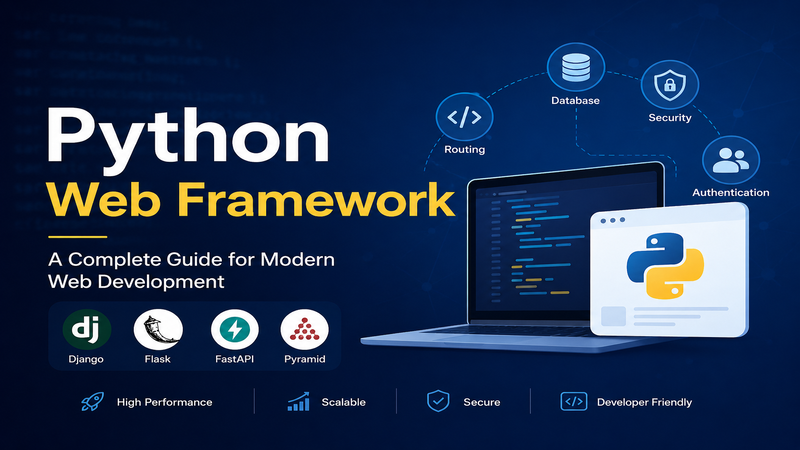
Python Web Framework: A Complete Guide for Building Modern Web Applications
Python has become one of the most popular programming languages because of its simplicity, flexibility, and powerful ecosystem. Whether you are creating a personal blog, an eCommerce platform, or a large enterprise application, choosing the right Python web framework can make development faster and more efficient. A good framework provides ready-made tools for handling routing, databases, authentication, security, and templates, allowing developers to focus on building features instead of writing repetitive code. Today, Python web frameworks are widely used by startups, enterprises, and independent developers alike. They support rapid development, clean code organization, and long-term project maintenance. In this guide, you’ll learn what a Python web framework is, why it matters, the different types available, and how to choose the right one for your next web development project.
Understanding Web Frameworks in Python
A Python web framework is a collection of libraries and tools that simplify the process of building web applications. Instead of writing every function from scratch, developers use a framework that provides pre-built components for common tasks like URL routing, database management, form handling, authentication, and security. Frameworks also encourage developers to follow industry best practices, making projects easier to maintain and scale over time. Whether you’re developing a small website or a complex cloud application, a Python web framework reduces development time while improving code quality. Most frameworks also have active communities that continuously release updates, security patches, and useful extensions. This makes them reliable choices for both beginners and experienced software engineers working on modern web applications.
Why Developers Prefer Python for Web Development
One of the biggest reasons developers prefer a Python web framework is productivity. Instead of spending weeks building basic website functionality, developers can use built-in features and focus on solving business problems. Python frameworks also offer excellent documentation, making learning much easier compared to many other programming ecosystems. Security features such as CSRF protection, SQL injection prevention, and authentication systems help create safer applications without requiring extensive security expertise. Additionally, frameworks support modular development, making collaboration among team members more organized. Their compatibility with cloud services, APIs, and modern frontend technologies makes Python an excellent choice for today’s web development industry.
Different Types of Web Development Frameworks
Python frameworks generally fall into three categories: full-stack frameworks, micro frameworks, and asynchronous frameworks. Each serves different project requirements depending on complexity and performance needs. Full-stack frameworks include everything required for building complete applications, including database integration, authentication, template engines, and administration panels. Micro frameworks provide only the essentials, allowing developers to add components as needed for greater flexibility. Asynchronous frameworks are designed for handling many simultaneous connections efficiently, making them suitable for chat applications, APIs, and real-time services. Understanding these categories helps developers select a framework that matches their project’s goals, team size, and expected traffic.
Key Benefits for Modern Developers
Using a Python web framework offers numerous advantages beyond faster coding. Frameworks encourage standardized project structures, making applications easier to understand, debug, and maintain over time. Many frameworks include built-in testing tools that help developers identify bugs before deployment. Performance optimization, caching support, middleware integration, and API development tools further improve application quality. Security remains another major benefit, as popular frameworks receive regular updates that address newly discovered vulnerabilities. Additionally, extensive plugin ecosystems allow developers to extend functionality without reinventing existing solutions. These benefits significantly reduce development costs while improving reliability and scalability.
Top Frameworks Every Developer Should Know
Several frameworks dominate the Python web development ecosystem because of their reliability and mature communities. Django is often chosen for large applications because it includes an admin panel, authentication system, and ORM by default. Flask remains a favorite among developers who prefer flexibility and lightweight architecture. FastAPI has gained tremendous popularity for building high-performance APIs thanks to its asynchronous capabilities and automatic documentation generation. Pyramid offers flexibility for both small and enterprise-level projects, while Tornado excels in handling long-lived network connections. Each Python web framework serves different development styles, making it important to understand your project requirements before making a decision.
How to Select the Best Framework for Your Project
Selecting the best Python web framework depends on your project goals, development experience, and future scalability requirements. Beginners often benefit from frameworks with excellent documentation and large communities because finding tutorials and troubleshooting resources becomes much easier. If you’re developing a content management system or enterprise application, a full-stack framework may save considerable development time. For lightweight APIs or microservices, a smaller framework often provides better flexibility and performance. Teams should also evaluate community support, available plugins, long-term maintenance, deployment options, and compatibility with existing technologies. Making an informed decision early reduces technical debt and future migration challenges.
Performance Factors That Matter
Performance is an important consideration when choosing any Python web framework. Modern frameworks use optimized routing systems, efficient database connections, caching mechanisms, and asynchronous processing to improve response times. Application performance depends not only on the framework itself but also on coding practices, database optimization, hosting infrastructure, and caching strategies. Lightweight frameworks may offer faster startup times, while full-stack frameworks provide greater development efficiency despite slightly higher overhead. Developers should benchmark applications under realistic workloads before selecting a framework solely based on performance claims. Proper optimization techniques usually have a much greater impact than the framework choice alone.
Essential Security Features for Web Applications
Security is one of the biggest reasons developers choose a Python web framework for web application development. Modern frameworks include built-in protection against common cyber threats, reducing the risk of vulnerabilities during development. Features such as CSRF protection, secure session management, password hashing, input validation, and SQL injection prevention are often available by default. Using these built-in security mechanisms allows developers to create safer applications without implementing every protection manually. However, developers should still follow secure coding practices, keep dependencies updated, and regularly test applications for vulnerabilities. Combining framework security with proper server configuration and authentication methods creates a strong defense against online attacks. As businesses increasingly rely on web applications, security remains a top priority for every development project.
Building Powerful APIs with Python
Modern applications rely heavily on APIs, making API development one of the most important use cases for a Python web framework. Frameworks provide tools for creating RESTful APIs, handling JSON data, validating requests, and managing authentication with minimal effort. Many developers also integrate automatic API documentation, making it easier for frontend teams and third-party developers to understand available endpoints. Features such as middleware support, asynchronous processing, and serialization improve API performance while reducing development time. Whether building mobile backends, SaaS platforms, or cloud services, Python frameworks provide everything needed to create scalable and maintainable APIs that support thousands of concurrent users efficiently.
Common Development Challenges
Although every Python web framework simplifies development, developers may still encounter challenges during a project’s lifecycle. Choosing the wrong framework for project requirements can lead to unnecessary complexity or limited scalability as the application grows. Dependency management, deployment configuration, performance optimization, and learning advanced framework concepts may require additional time, especially for beginners. Large applications also demand proper architecture, testing, and documentation to remain maintainable. Fortunately, active communities, extensive documentation, and countless online tutorials help developers solve most issues quickly. Understanding these challenges early allows teams to prepare effective solutions before they become significant obstacles.
Best Practices for Long-Term Success
Following best practices ensures that applications built with a Python web framework remain reliable, maintainable, and scalable. Developers should organize projects using clear folder structures, reusable components, and consistent naming conventions to improve readability. Writing automated tests, documenting APIs, securing sensitive data, and using environment variables instead of hardcoded credentials are equally important. Regular dependency updates help maintain compatibility while protecting applications from known security vulnerabilities. Developers should also use version control systems and continuous integration pipelines to streamline collaboration. Adopting these practices from the beginning reduces technical debt and improves long-term project success.
Future Trends in Web Development
The future of the Python web framework ecosystem looks extremely promising as demand for web applications, artificial intelligence, cloud computing, and API-driven services continues to grow. Frameworks are becoming faster, more secure, and better integrated with modern technologies. Asynchronous programming, serverless deployment, containerization, and cloud-native development are shaping the next generation of Python frameworks. Developers can also expect improved developer tools, enhanced security features, and better support for machine learning integration. Businesses seeking scalable digital solutions will likely continue choosing Python because of its mature ecosystem and active global community. Continuous innovation ensures that Python frameworks remain competitive for years to come.
Conclusion
Choosing the right Python web framework is one of the most important decisions in web application development. The ideal framework depends on your project size, performance requirements, scalability goals, and development experience. Whether you need a lightweight solution for APIs or a full-featured platform for enterprise applications, Python offers frameworks that fit every requirement. Beyond simplifying development, these frameworks improve security, maintainability, and long-term scalability. Their strong communities, extensive documentation, and continuous updates make them reliable choices for businesses and individual developers alike. By understanding available options and following development best practices, you can build modern, secure, and high-performing web applications that remain easy to maintain as your project grows. Visit My Website for More Information.
Frequently Asked Questions
1. What is a Python web framework?
A Python web framework is a collection of tools and libraries that help developers build websites and web applications more efficiently by providing pre-built features, such as routing, authentication, database integration, and security.
2. Which Python web framework is best for beginners?
Frameworks with clear documentation and strong community support are generally the best choice for beginners because they make learning web development much easier.
3. Why should I use a Python web framework instead of coding from scratch?
Using a framework saves development time, improves security, encourages best coding practices, and makes applications easier to maintain and scale over time.
4. Are Python web frameworks suitable for large business applications?
Yes. Many organizations utilize Python frameworks to develop enterprise-level applications, as they provide scalability, security, and long-term maintainability.
5. Can Python web frameworks be used for API development?
Absolutely. Modern Python frameworks provide powerful tools for creating secure, fast, and scalable APIs that support web, mobile, and cloud-based applications.